Two Piece Statement
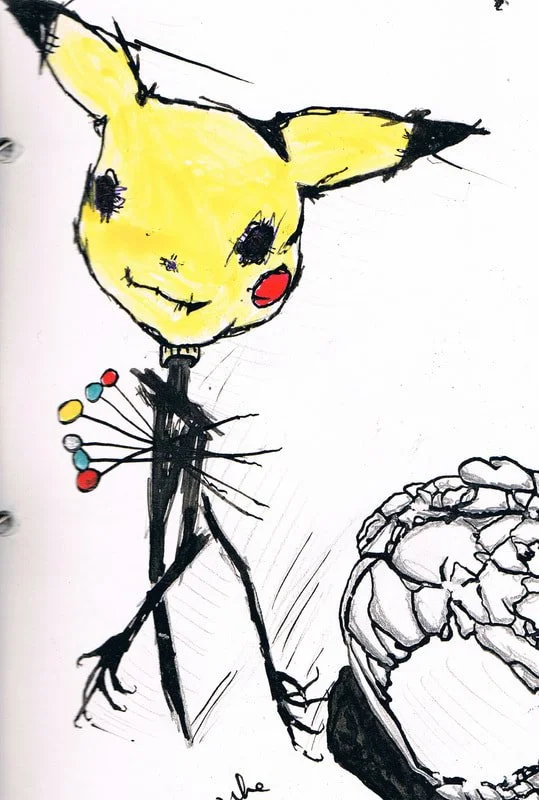
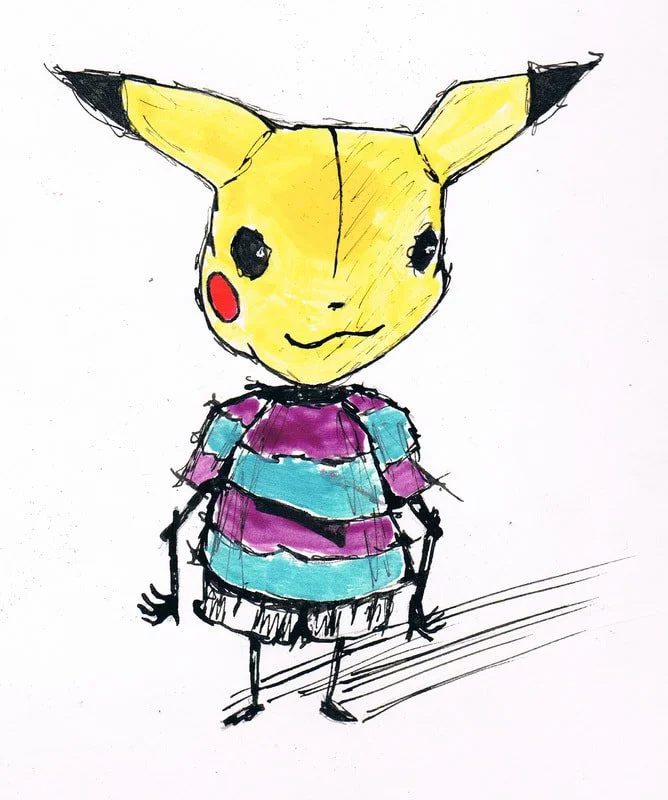
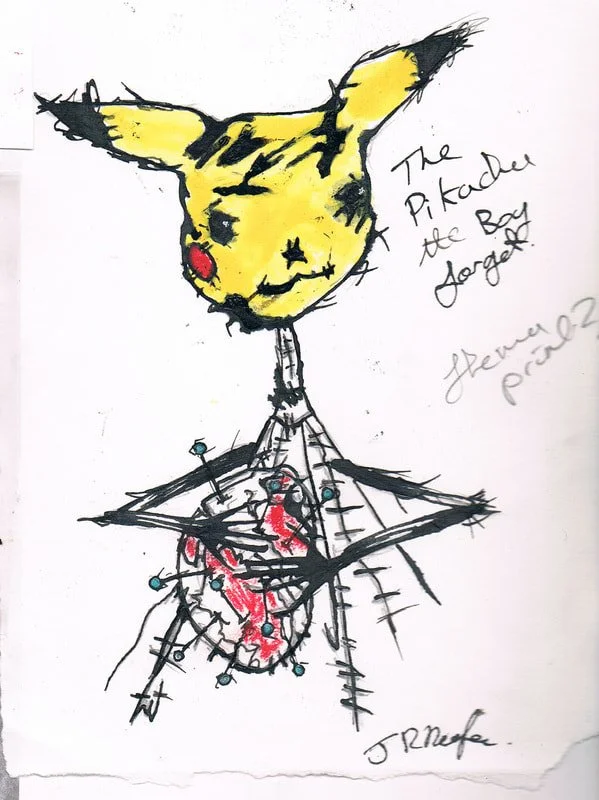
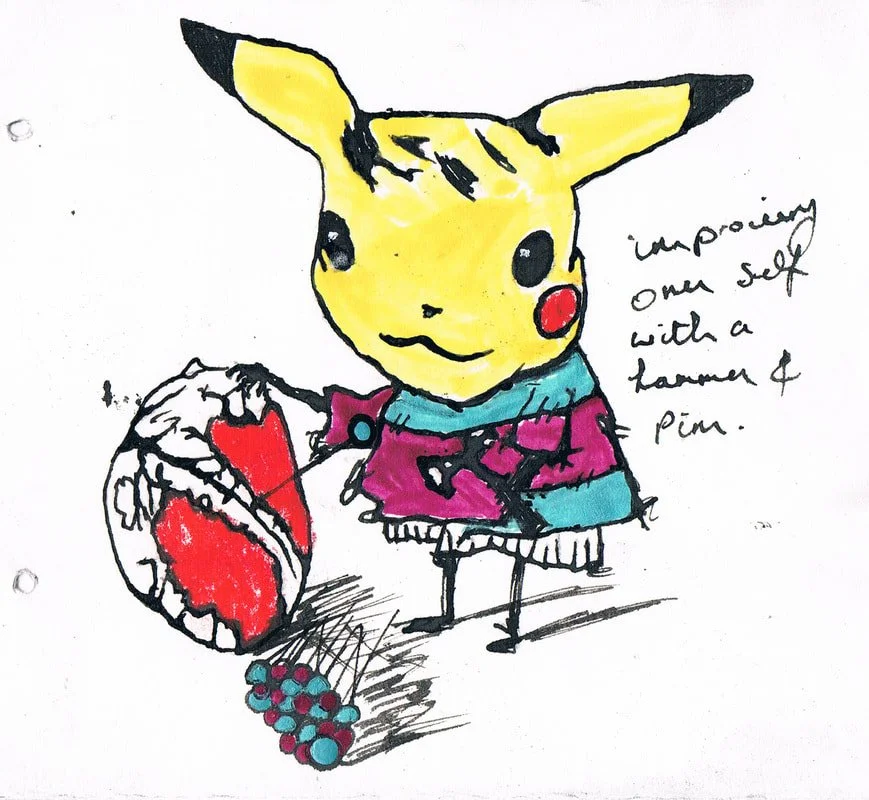
These two looks explore how we return to familiar comforts as adults, and how those references shift over time. Childhood imagery is revisited through a more distorted lens, appearing aged, worn, and maybe lightly off-key, reflecting how comfort can evolve into something more complex or even unsettling.
The drawings rework recognizable forms into fragile, altered figures, combining playful references with darker undertones. Through mark-making and exaggeration, the work begins to explore the idea of comfort as a form of personal armour, something protective and familiar, but not always stable or intact.
These visual experiments informed the development of the garments, translating emotional and psychological ideas into material, texture, and form.
Sketchbook/Development
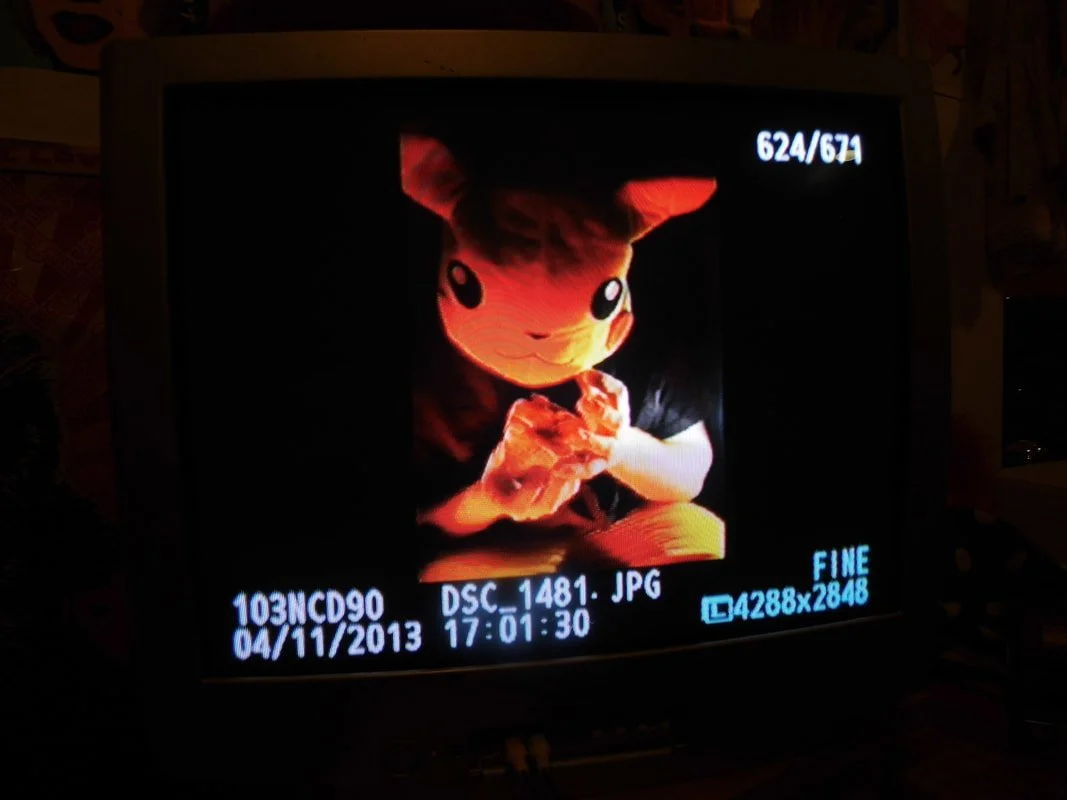
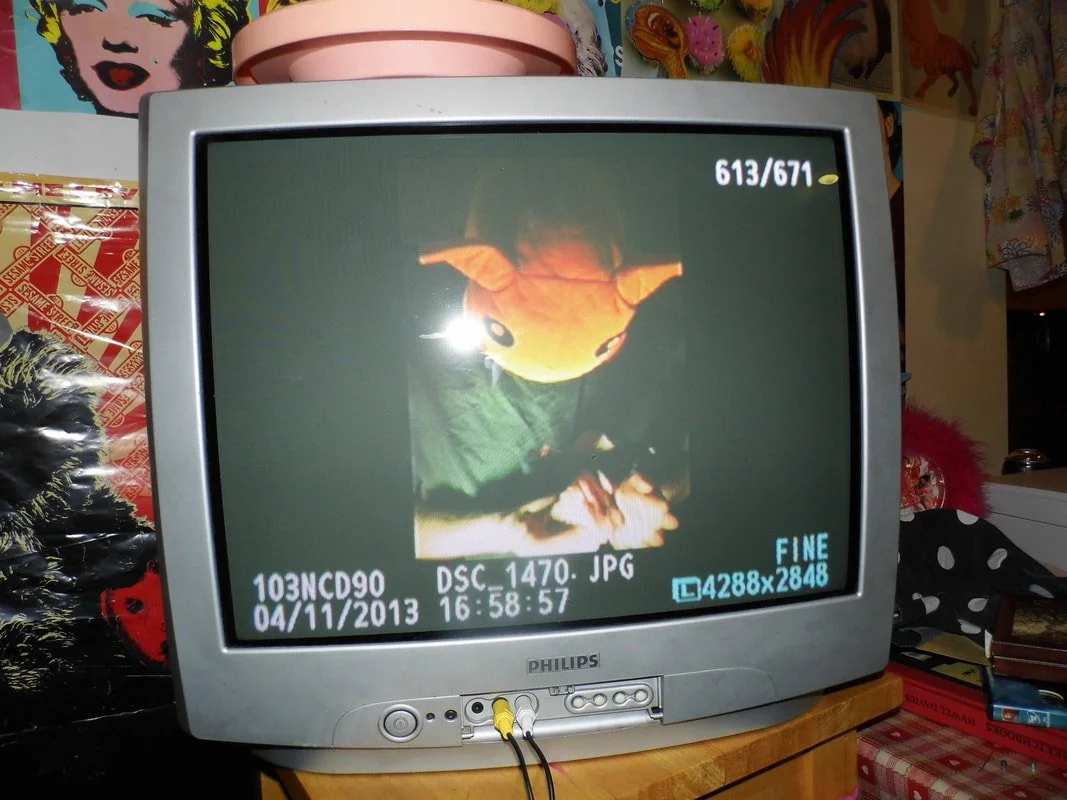
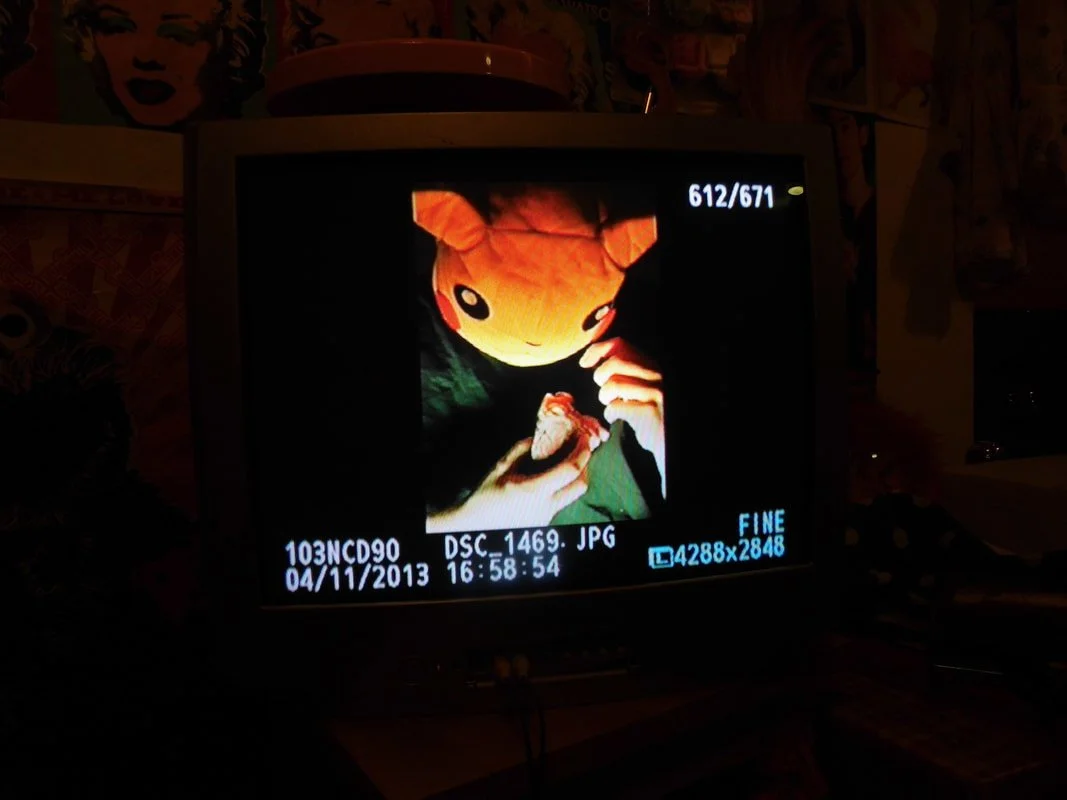
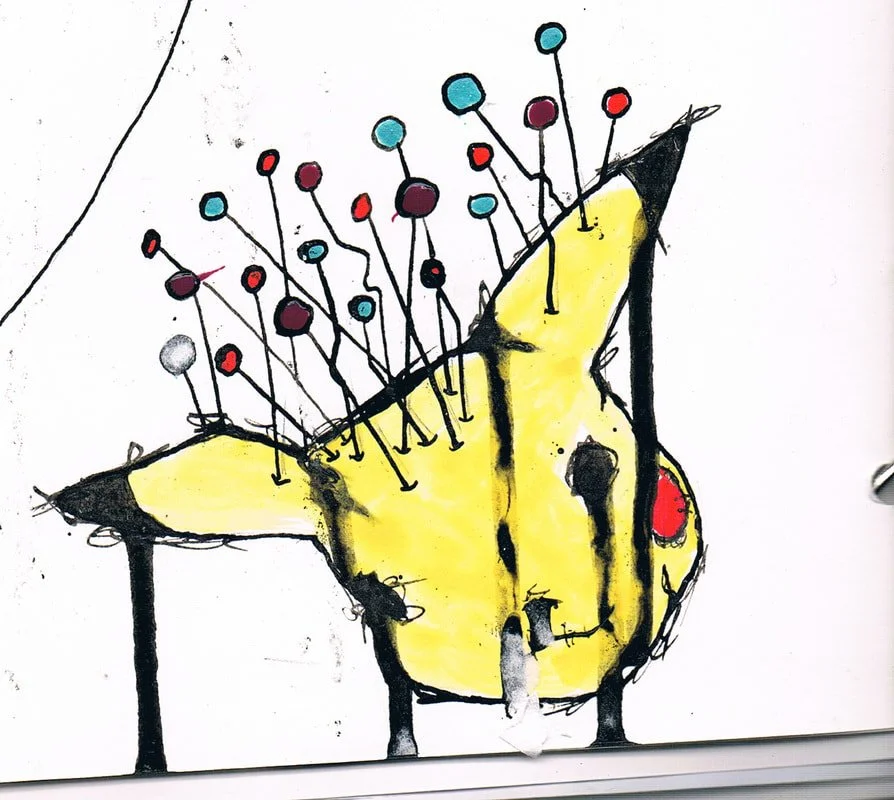
This image was developed using an old childhood Pikachu mask, worn and filmed in motion, then projected onto a CRT television to capture distorted shapes. The screen’s resolution and movement introduced irregularities that were then translated into drawing, forming the basis of the altered character.
The figure was repeatedly reworked, exploring how a familiar form might appear after years of neglect—faded, worn, and slightly off. The process reflects how comfort objects can shift over time, becoming both recognizable and unsettling, functioning as a kind of personal armour shaped by memory and use.
Looks 1 & 2
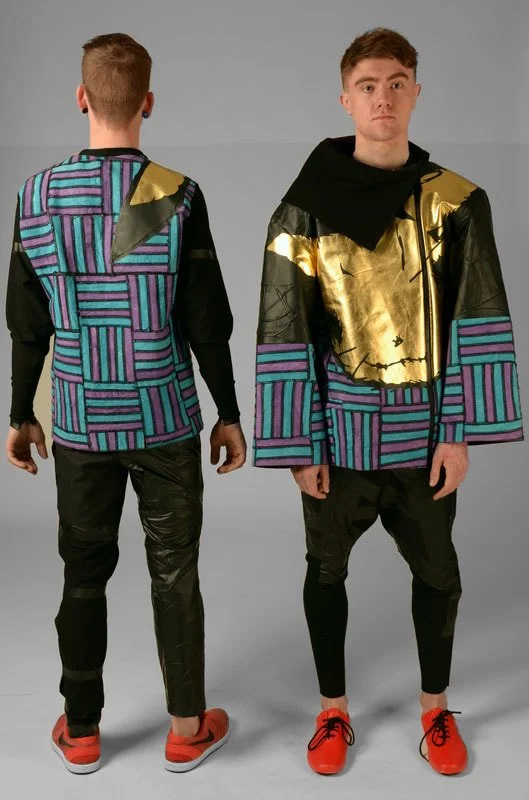
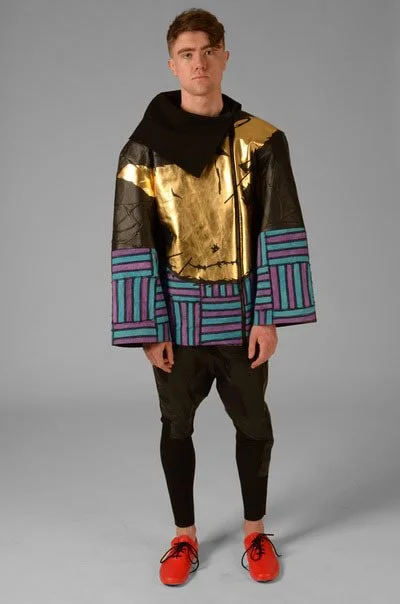
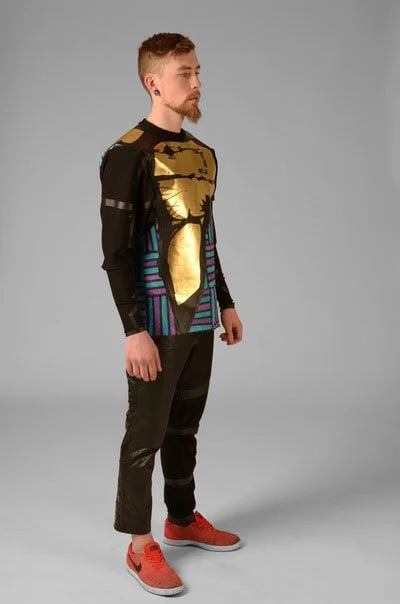
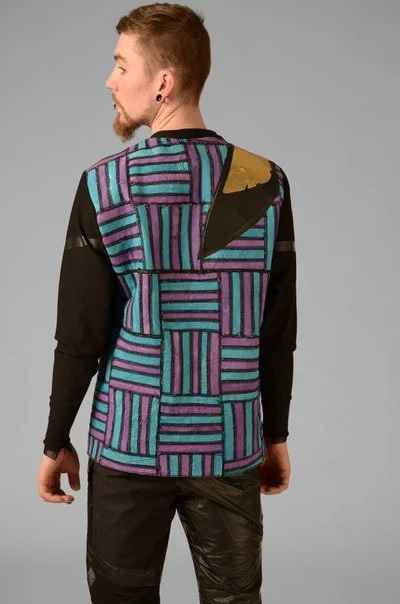
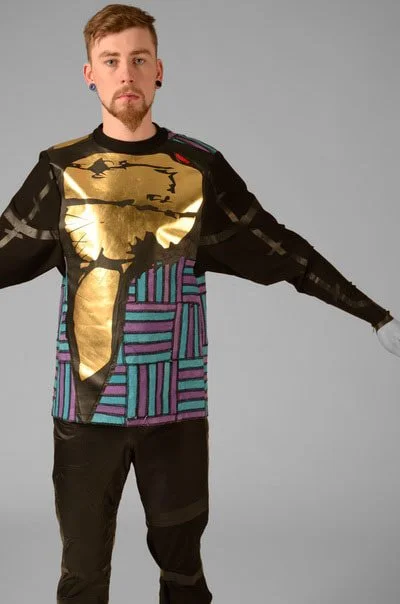
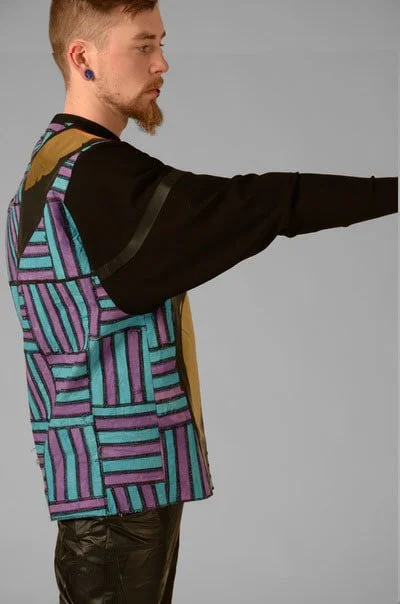
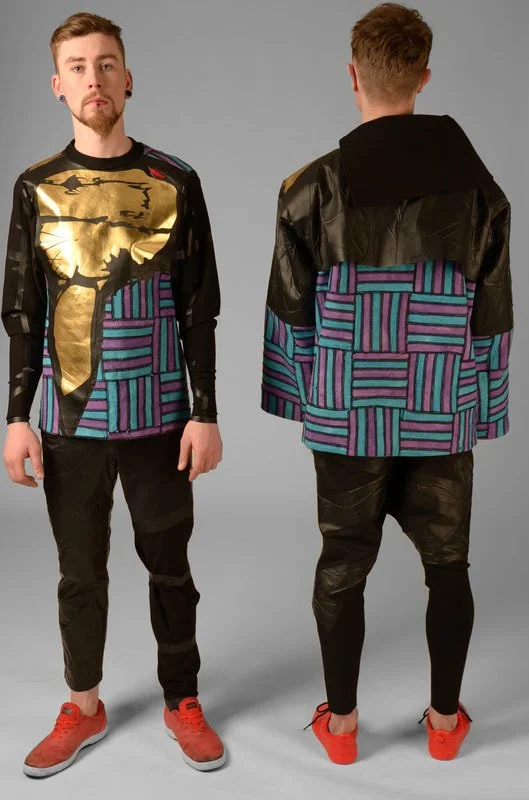
Look 1: Establishes the collection’s focus on distorted familiarity and protection, translating drawn imagery into material form. The upper garment features a gold leather face panel, with surface details recreated by cutting and heat-sealing polyurethane using stencilled shapes taken from enlarged sketches. The sleeves are constructed from hand-dyed calico strips, stitched together using a zig-zag stitch to mimic doodling, creating a textured, illustrative surface. The lower garment continues this material language, combining cotton, foam, and polyurethane with a jersey base, reinforcing the balance between structure and softness.
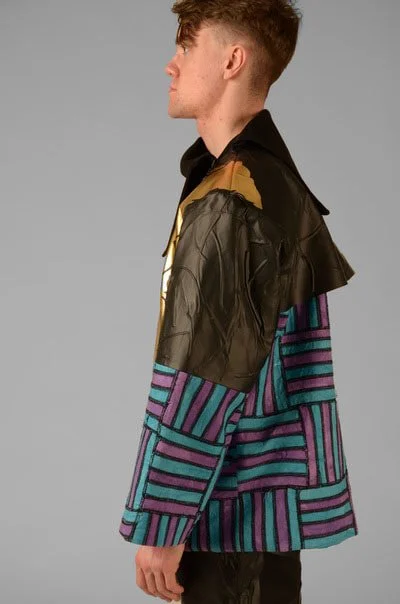
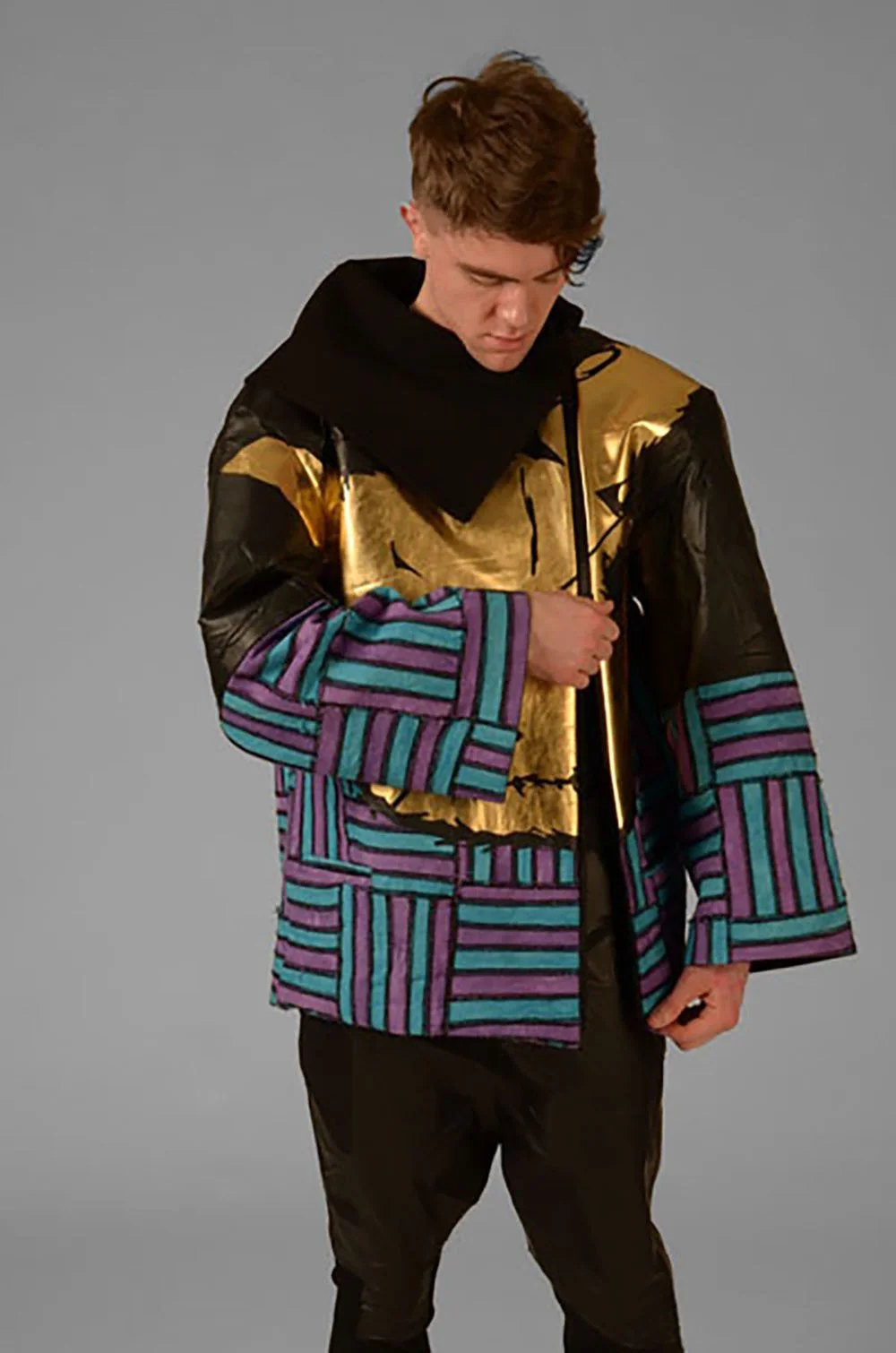
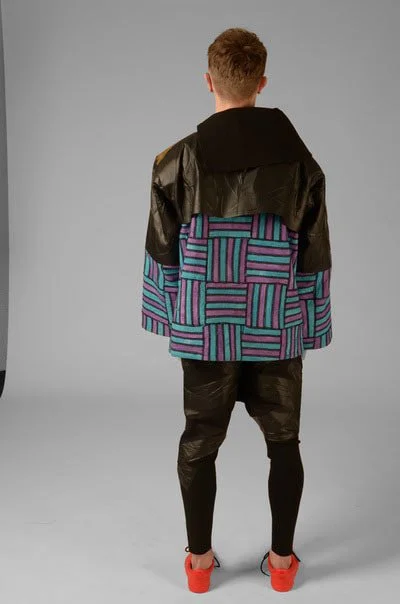
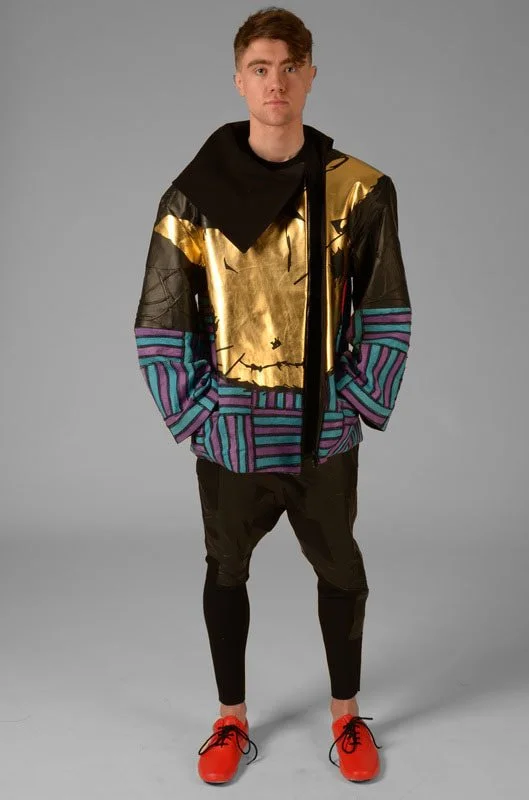
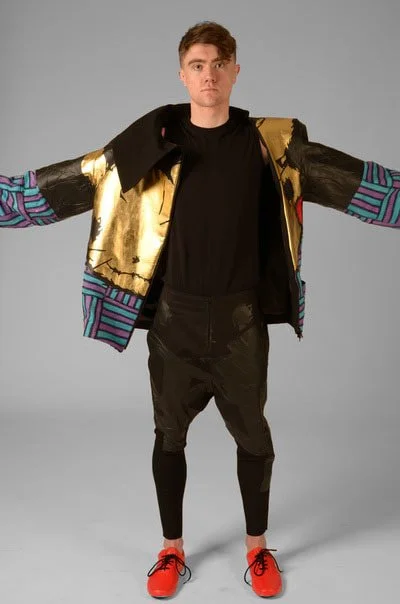
Look 2: Develops the visual language of the collection through repetition and refinement, maintaining the same material palette while exploring variation in surface and placement. The garment features a gold leather face panel, with polyurethane-applied lines extending across the jersey sleeves to mimic drawn sketch marks. Panels of hand-dyed calico, stitched with a zig-zag ‘doodle’ construction, introduce contrast and texture, while the trousers repeat the same cotton, foam, polyurethane, and jersey construction as Look 1. The look reinforces the translation of illustration into garment, where drawn marks become structural and material elements.